Flabs
How to Get More Doctor Referrals for Your Diagnostic Lab

Nearly half of all diagnostic lab business walks in through a doctor's recommendation. Doctor referrals are the largest segment of the diagnostics market in India with a 49% share in 2025. It is driven by the reality that physicians direct patients toward the tests they need. That's the backbone of how diagnostic labs grow.
If you run a pathology lab and your referral numbers have plateaued, the problem usually isn't your test menu or your turnaround time. It is the relationship with the clinicians who send patients your way. The best part? You can increase doctor referrals for a diagnostic lab with proven strategies to build an organic popularity.
7 Proven Strategies to Get More Doctor Referrals
Most labs wait for referrals to happen. The ones that grow build for them deliberately. Here are seven strategies that work.
1. Make Your Lab Easy to Work With
Doctors refer patients to labs they trust. And trust in the context means reliability. Lab reports that arrive on time and results formatted clearly. A collection process that doesn't frustrate patients and bounce back to the clinic as a complaint.
Audit your own workflow honestly.
- How long does a report take from sample collection to delivery?
- Is your pathology test list accessible to clinicians before they refer?
- Do your reports flag critical values immediately?
If any of these have gaps, fix them before you invest in outreach. Getting more doctor referrals for your diagnostic lab starts with earning the right to ask.
2. Build Direct Relationships with Primary Care Physicians
The primary care to specialist referral process is where most diagnostic volume originates. A general practitioner suspects thyroid dysfunction, recommends a panel, and the patient walks into your lab or a competitor's. The deciding factor is almost always familiarity.
Assign a lab liaison or medical representative to visit primary care clinics regularly. Not to sell but to inform. Bring your updated test menu. Explain new tests you've added. Leave a direct contact for your reporting team so the doctor can call with a query.
Consistency matters more than frequency here. A monthly visit beats three visits in a single week followed by silence.
3. Invest in Accreditation
Accreditation is a credibility signal that doctors actually notice. Labs certified by NABL (National Accreditation Board for Testing and Calibration Laboratories) or recognised under the College of American Pathologists standards carry a measurable quality assurance guarantee. That matters to a clinician who is putting both their recommendation and their patient's health on the line.
If you're already NABL-approved, make sure that's visible everywhere: your website, reports, collection centre signage, and every communication you send to clinicians.
If not, treat it as a medium-term business priority. The credibility it builds directly supports your ability to secure doctor referrals for your diagnostic lab over the long term.
4. Offer Real Value, Not Just Discounts
Discounts on tests are a short-term play. They attract price-sensitive referrals and erode margin without building loyalty. What clinicians actually value is usefulness.
Think about what makes a doctor's clinical workflow easier.
- Dedicated query support from a pathologist for complex or ambiguous results.
- Curated panels for common clinical scenarios viz., pre-surgical workups, diabetes monitoring, fertility evaluation.
- Rapid turnaround for urgent samples with a clear promise and a consistent track record.
This is what effective lab marketing with doctor referral actually looks like. When your lab becomes genuinely useful to a clinician's practice, doctor referrals for your diagnostic lab become stickier and harder for competitors to dislodge.
5. Use Technology
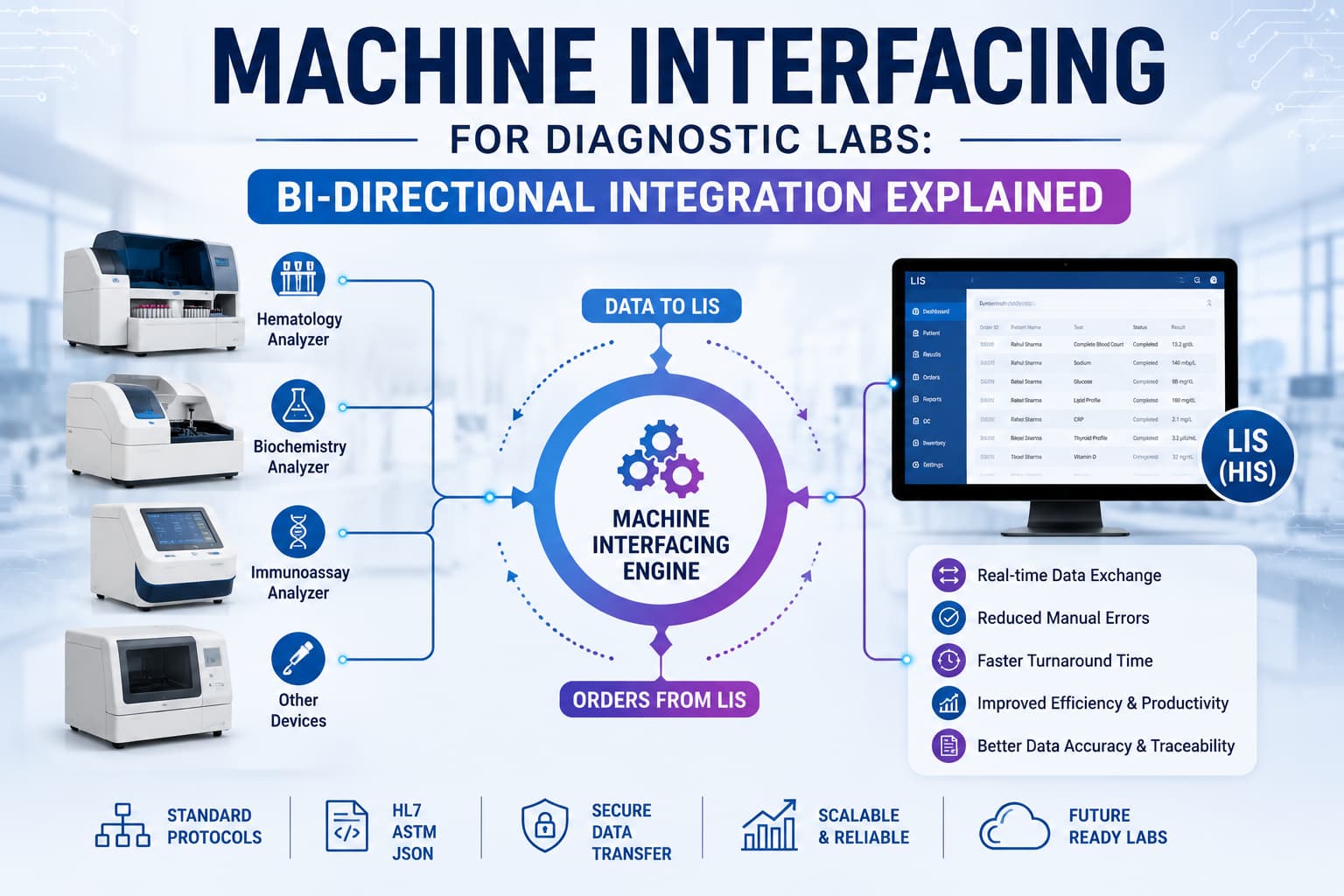
The medical referral process has moved significantly online. Clinicians increasingly expect digital reports, WhatsApp-based query resolution, and portals where they can check their patients' results directly. If your lab still relies on paper reports or makes doctors wait on hold, you're losing ground to labs that don't.
Invest in a lab management system that delivers on what referring doctors actually need.
| Feature | Why It Matters |
|---|---|
| Digital report delivery (email/WhatsApp) | Reduces wait time, removes friction |
| Doctor-specific login portal | Direct visibility into their patients' reports |
| Critical value alerts | Immediate notification builds clinical trust |
| Integrated test request forms | Simplifies the referral step for the clinic |
| Referral tracking and history | Helps doctors monitor patients across visits |
Technology reinforces relationships with them. When a doctor receives a report in 20 minutes and can message your pathologist directly with a question, that experience creates loyalty that's difficult to replicate with price alone.
6. Focus Where the Referral Density Is Highest
Urban areas account for a 70% share of India's diagnostics market in 2025. This reflects higher healthcare awareness, stronger insurance penetration, and more specialists per square kilometre. For most growing labs, the highest-density opportunities for doctor referrals for your diagnostic lab are concentrated in metropolitan and tier-1 cities.
That doesn't mean ignoring tier-2 cities. But it does mean prioritising your relationship-building where referral volume is greatest. Build your reputation and operational strength in urban clusters first. Then expand outward using the credibility and processes you've already established.
7. Close the Feedback Loop
Here's the surprising secret behind doctor referrals that most labs never discover: doctors want to know what happened to their clinical decision. When a physician refers a patient for a complex panel or a tissue biopsy, they're waiting to see whether the result confirmed their suspicion.
A lab that closes this loop earns disproportionate loyalty. You can build this into your routine in practical ways.
- Monthly case-based educational sessions with your main referring clinicians.
- Anonymised pathology data insights shared via email or WhatsApp groups.
- Direct pathologist-to-doctor consultations on complex or borderline cases.
The Real Answer to How to Grow a Pathology Lab
Sustainable growth in the diagnostics business comes down to this: be the lab that doctors think of first. Not the cheapest. Not necessarily the closest. The most reliable, the most useful, and the most responsive.
Doctor referrals for your diagnostic lab don't happen because you asked for them. They happen because you've made it easy and logical for clinicians to trust you with their patients.
Every strategy on this list points toward the same outcome: building a referral relationship that doesn't need constant maintenance.
Start with one strategy. Execute it well. Then build from there.
Flabs helps diagnostic labs streamline operations, manage reports digitally, and build stronger referral relationships with clinicians. If you're looking to grow your lab's referral network, talk to our team.
Realted - Doctor Referral Commission in Diagnostic Labs
Boost Your Doctor Referrals Today
Streamline your pathology lab referrals and strengthen doctor relationships with ease.
Start managing, tracking, and growing your referrals more efficiently with our smart digital solution.
👉 Explore the Flabs Doctor Referral App
Get Started at ₹1!
Try Flabs for a full month for just ₹1.
Follow us on